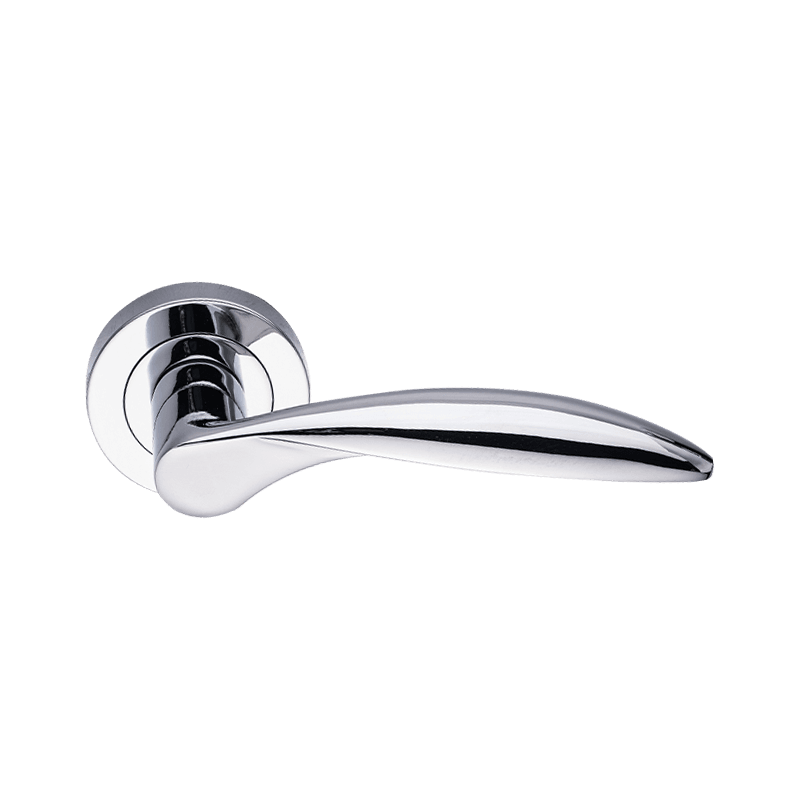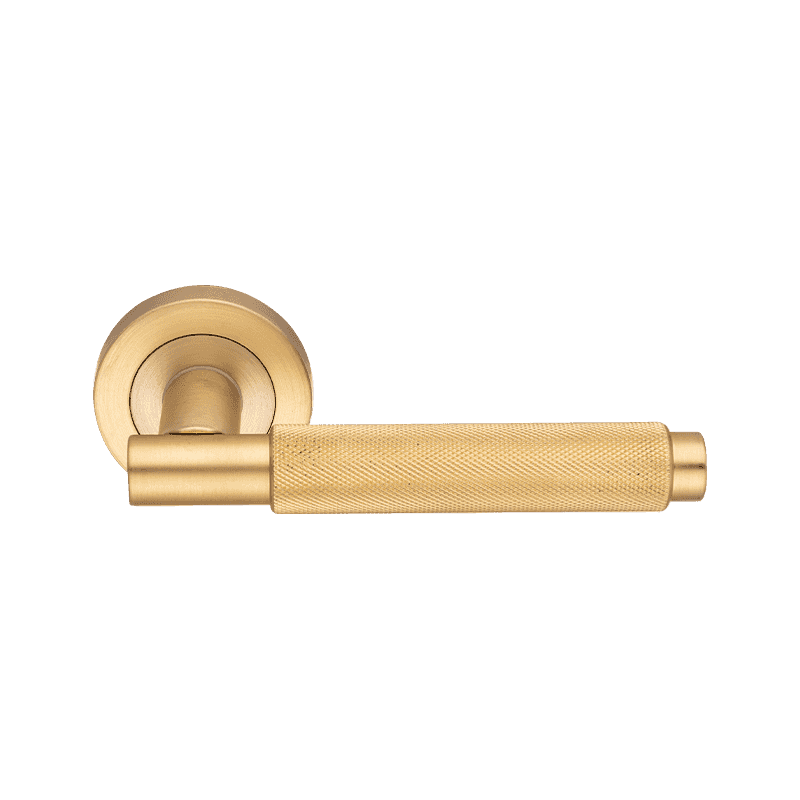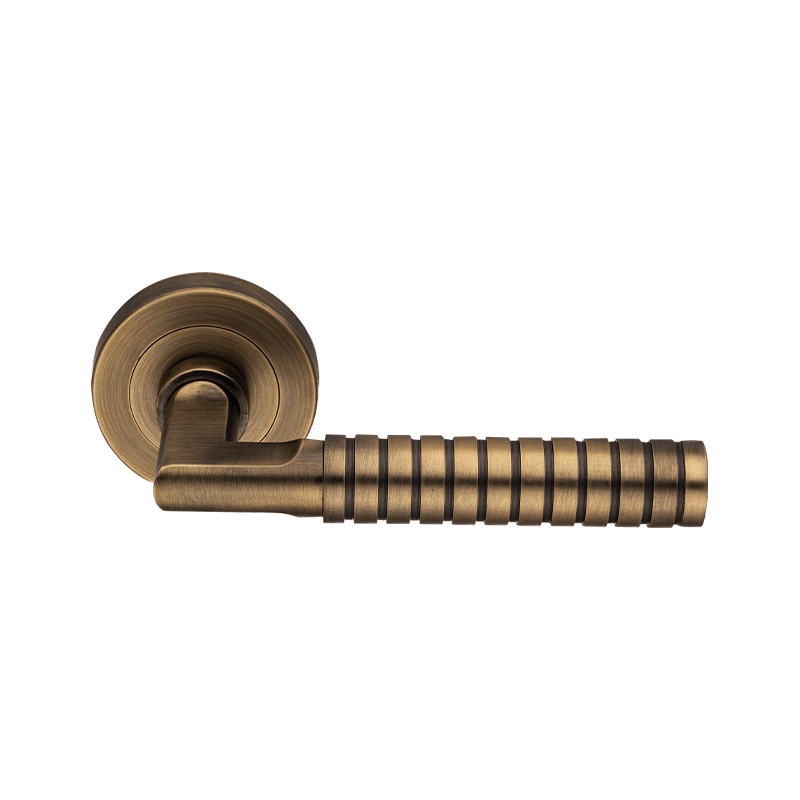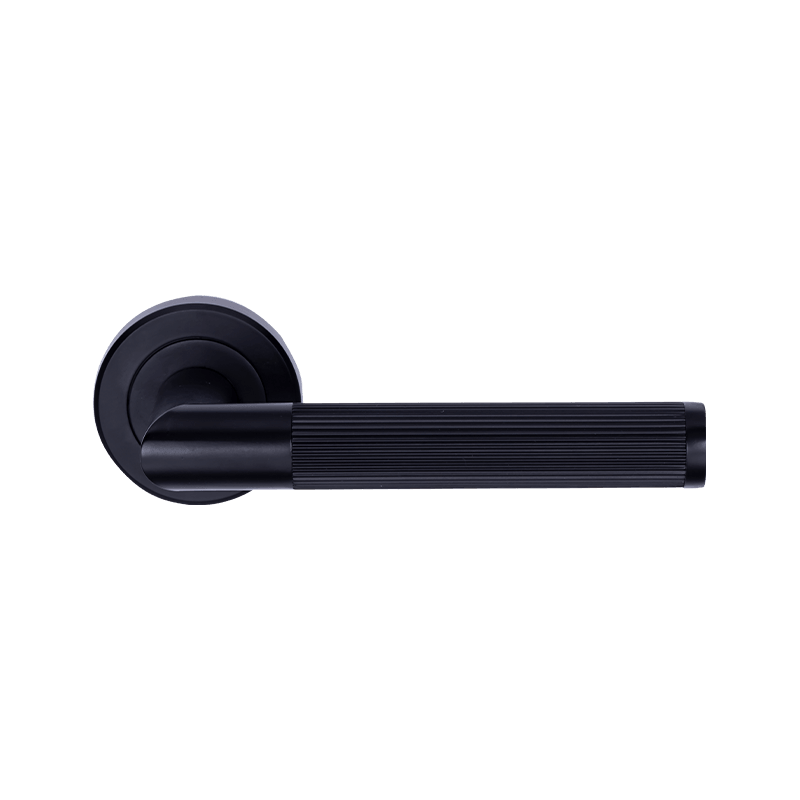
A door handle that rocks, droops or spins is almost always a fixing problem rather than a broken lock. In the large majority of cases the grub screw under the rose, or the two through-bolts clamping the backplate, has simply backed out after months of daily use; a 2.5 mm hex key and five minutes will put it right at no cost. If the lever still hangs slack after tightening, or the handle turns without moving the latch, the return spring, cassette or spindle is worn, and a replacement handle is the cheaper answer.
The rest of this guide covers which of the five common faults you actually have, the tools worth having within reach, the correct tightening sequence, the mistakes that strip threads, and the point at which repair stops making financial sense.
Five faults that all feel like a loose door handle
A wobble is not one single defect; it comes from one of five specific points on the door, and each one is fixed in a different way, so identify the fault before reaching for a screwdriver.
| Symptom | Most likely cause | Repair route | Typical time |
|---|---|---|---|
| Lever rocks up and down on the rose | Grub screw has backed out of the neck | Tighten with hex key in quarter turns | 5 minutes |
| Whole backplate lifts away from the door face | Through-bolts or wood screws have compressed the door skin | Tighten alternately, or fit slightly longer screws | 10 minutes |
| Lever droops and will not spring back | Return spring inside the cassette has failed | Replace the handle set; springs are rarely sold alone | 20 minutes |
| Handle turns but the latch stays put | Spindle too short, snapped, or not seated in the follower | Fit a correct 8 mm square spindle of the right length | 15 minutes |
| Knob rotates freely or rattles | Set screw loose on the shank, or worn knob spindle | Tighten the set screw; replace if the thread is stripped | 10 minutes |
Tools and checks before you tighten anything
Six inexpensive items cover almost every fixing type used on residential doors, and none of them requires removing the lock.
- 2.5 mm hex key: the standard size for lever grub screws, though some models use 2 mm or 3 mm, so test the fit before applying force.
- No. 2 Phillips screwdriver: for backplate screws, wood screws and bolt-through fixings.
- Small flat-head screwdriver: to lift a clip-on rose cover or a push-fit cap.
- Torch or phone light: grub screws sit on the underside of the neck, where shadow hides them.
- Spare M4 grub screws: a fair share of loose handles have lost the screw completely.
- Blue removable threadlocker: optional, but useful on doors that see heavy daily traffic.
Before touching the handle, open and close the door while watching the top hinge. A door that has dropped by even 2 mm will pull the latch against the strike plate, and that side load is what works fixings loose in the first place. Tighten the hinge screws first, then the handle.
How to fix a loose lever handle, step by step
Work outward from the cheapest fix: grub screw first, through-bolts second, spindle third, replacement last.
Step 1: Tighten the grub screw
Find the small screw on the underside of the lever neck or on the rose itself, insert the hex key fully, and turn clockwise in quarter-turn increments. Stop as soon as the lever no longer rocks but still travels freely; a grub screw only needs to bite into the spindle flat, and forcing it further can crack a zinc rose.
Step 2: Tighten the backplate or through-bolts
Plate handles usually show two or three screws on the face of the plate, while bolt-through sets hide the heads on the inside rose and clamp both sides of the door together. Tighten them alternately, half a turn at a time, so the plate seats flat instead of tilting. If a screw spins without gripping, the thread in the door has stripped and a slightly longer screw, or a repair sleeve, is required.
Step 3: Check and reset the spindle
The spindle is the 8 mm square bar linking both handles to the latch follower. It should protrude evenly on both sides of the door and engage the follower by at least 10 mm at each end. On a 44 mm door, an 8 x 100 mm spindle is the usual fit; if it is 5 mm short, one handle will turn freely while the other works the latch.
Step 4: Springs and cassettes
When the lever droops and gravity wins, the return spring inside the cassette has broken. That spring is rarely available as a spare part, so replacing the pair of handles is the practical fix rather than a false economy on a component that will fail again.
Fixing a loose door knob works differently
Knobs are held by a set screw that grips the shank rather than by a sprung cassette, so the repair is quicker but the failure mode is different: the screw tends to chew a groove in the spindle instead of simply loosening.
- Look for the set screw on the collar or on the underside of the rose, then tighten it with the matching hex key.
- If the knob pulls straight off, the set screw has been spinning on a smooth shank; file a small flat on the spindle, or fit a new knob with an undamaged collar thread.
- Check that the knob still engages the latch follower; a knob that turns without resistance has usually lost contact with the spindle entirely.
On doors with heavy use, a sprung mortice knob with a proper grub-screw collar holds its adjustment far longer than a friction-fit rosette.
 Orion Sprung Mortice Domed Door KnobFor sprung mortice doors where adjustment matters, this zinc domed knob comes in matte black with a 60 mm knob and 55 mm rose.View Product →
Mistakes that turn a five-minute fix into a replacement
Most handles that end up in the bin were not worn out; they were damaged during an over-enthusiastic repair.
- Using an imperial hex key on a metric grub screw rounds the head and makes removal far harder.
- Over-tightening a plate screw cracks the zinc casting, especially on thinner decorative roses.
- Applying superglue to threads welds the screw in place and removes any future adjustment.
- Ignoring a sagging hinge, which keeps pulling the handle out of alignment until the fixings loosen again.
- Fitting a spindle that is too long, so the handle stands off the door and the rose never sits flush.
- Reusing short screws after the door skin has compressed, when a 3 mm longer screw would grip soundly.
Repair or replace: a practical comparison
Repair while the fault is purely a fixing; replace once a spring, spindle or thread has worn, because the next failure is usually only weeks away.
| Consideration | Repair the existing handle | Fit a new handle |
|---|---|---|
| Outlay | Effectively zero | Cost of one pair of handles |
| Time | 5 to 15 minutes | 20 to 30 minutes |
| Works when | Screw, bolt or alignment problem | Spring, cassette, spindle or thread failure |
| Stops working when | The casting or thread is already damaged | Wrong spindle length or fixing centres were ordered |
| Expected life afterwards | Months to years, depending on traffic | Full service life of the new set |
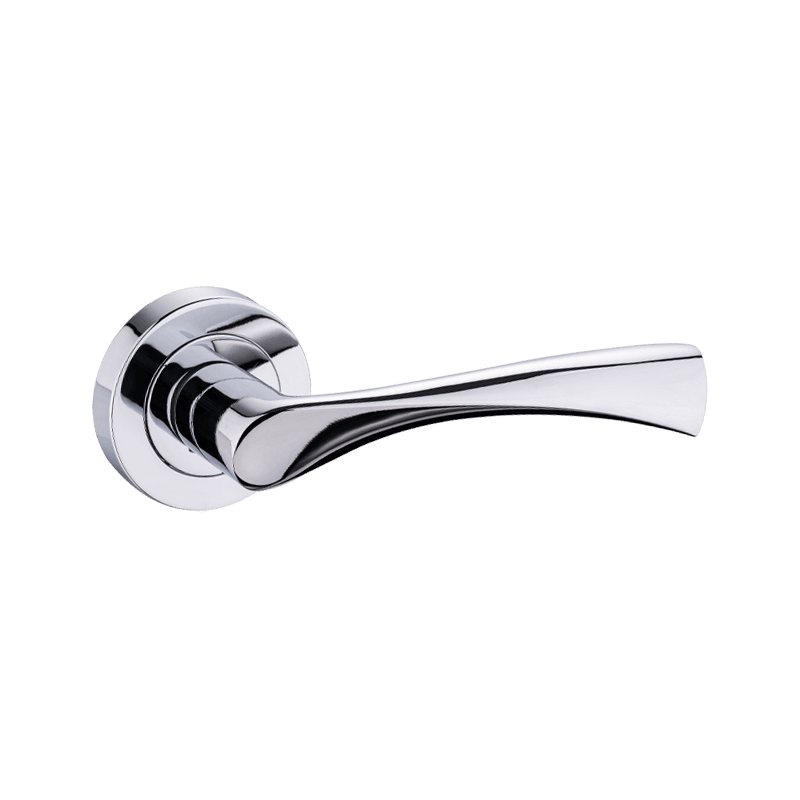
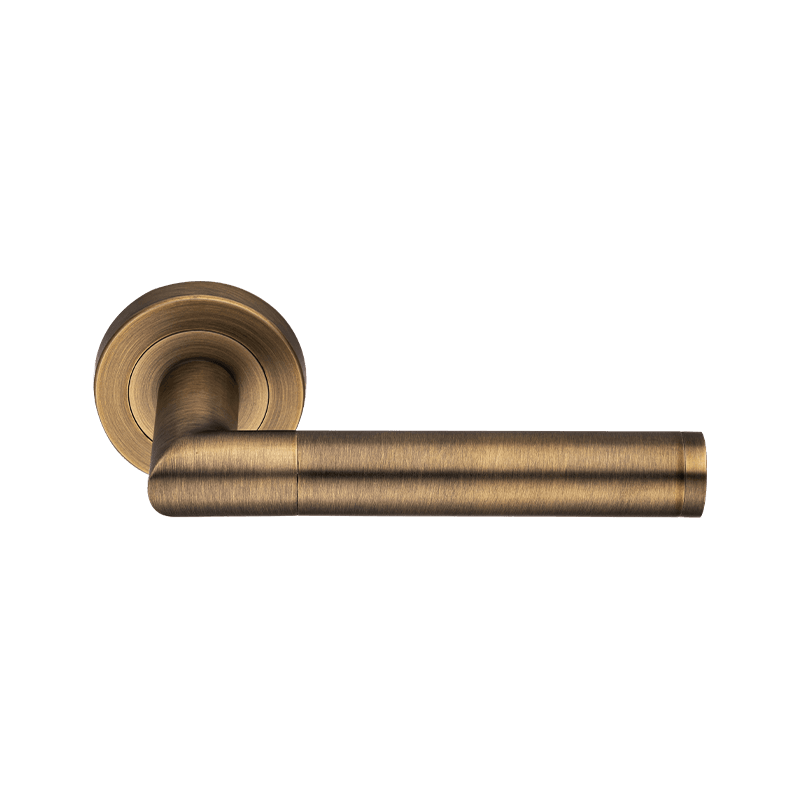
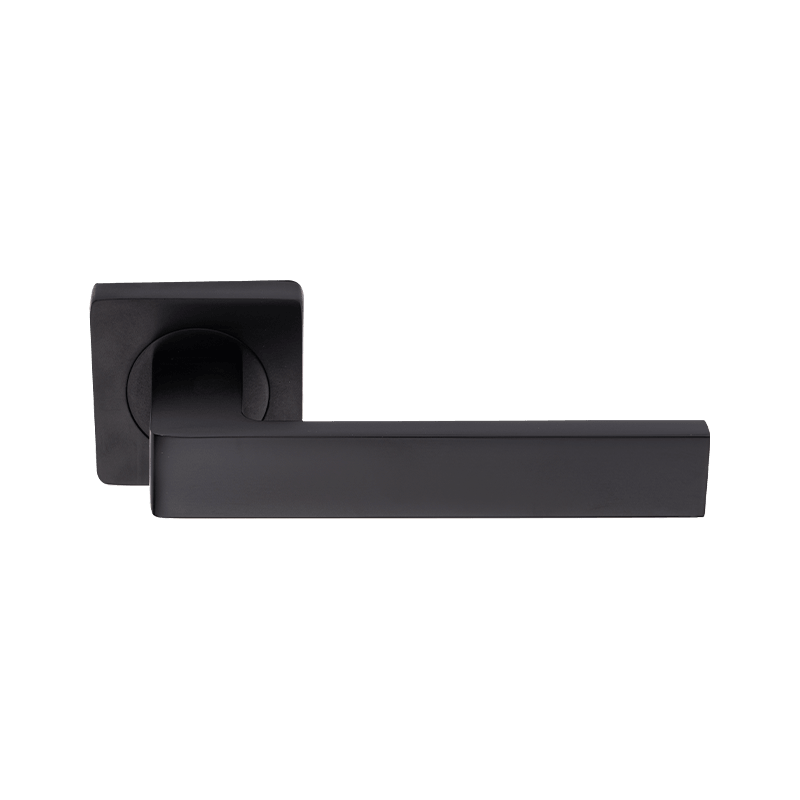
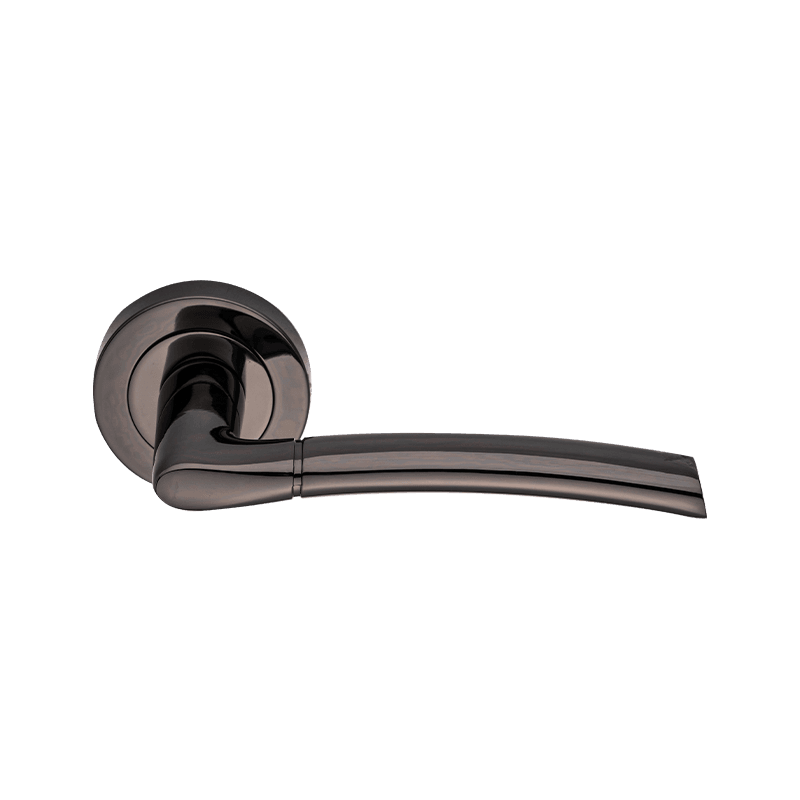
Lever handles on plate and lever handles on rose share the same 8 mm spindle standard, so a like-for-like swap is usually a straight fit; compare rose diameter and fixing centres against the old set before ordering, or browse the lever door handle range to see the size options side by side.
Choosing a replacement that stays tight
Four measurements decide whether a new handle fits and stays firm: spindle size, door thickness, fixing centres and latch backset.
- Spindle: 8 x 8 mm square, cut or ordered to door thickness plus roughly 15 to 20 mm.
- Door thickness: 35 to 44 mm covers most interior doors; measure at the latch edge, not the middle of the door.
- Fixing centres: the distance between backplate screw holes, commonly 38 mm or 50 mm on roses and variable on plates.
- Backset: 45 mm or 57 mm tubular latches are standard, and the plate must clear the latch body without overhanging the door edge.
For doors in rental units, hotels or busy family hallways, a bolt-through fixing distributes the load across both faces of the door and resists loosening far better than short wood screws into a hollow core.
 DH180B53 Flat Lever Handle on 180 mm BackplateFor domestic or commercial doors needing a wider integrated plate, this satin chrome lever comes in lock, latch, Euro and bathroom versions.View Product →
Where the cassette is the part that keeps failing, choose a set with a sprung mechanism built into the rose and a solid lever, which keeps the return action consistent instead of relying on a light spring in the latch.
 Heavy-Duty Passage Door Lever with Square RosetteBuilt for high-traffic interior passage doors, this zinc lever on a 52 mm square rose is supplied as a pair with fixing hardware.View Product →
Sprung sets in that category carry the spring in the rose rather than in the latch, which is why they hold their adjustment on doors that open dozens of times an hour.
Frequently asked questions
Why does my door handle keep coming loose after tightening?
Repeated loosening usually points to movement elsewhere: a dropped hinge, a compressed door skin, or a missing spring washer under the screw head. Fix the door alignment first, then re-tighten with a drop of removable threadlocker.
Can I tighten a handle without removing it?
Yes, for the most common type. The grub screw sits on the underside of the lever neck and can be reached with a hex key while the handle stays on the door. Backplate screws are also accessible from the face or the inside rose.
What size hex key do I need?
2.5 mm covers most lever handles, but 2 mm and 3 mm are also used. Try the key in the socket without turning; if it rocks noticeably, the size is wrong and forcing it will round the screw head.
My handle spins but the door will not open. Is the lock broken?
Usually not. A spinning handle means the spindle is not engaged in the latch follower, either because it is too short, has slipped to one side, or has snapped. The lock body is normally fine.
How tight should the screws be?
Snug, not brutal: roughly the force you would use on a hinge screw, around 1.5 to 2 Nm. Fasteners need to hold the plate flat against the door, and beyond that point the casting, the thread or the door skin takes the damage.
Sort the fault before the tool: a grub screw that needs a quarter turn looks identical to a broken spring until you test the lever's return. Once the spring, spindle or thread is genuinely worn, spending ten minutes tightening a failing component costs more in repeat visits than a straightforward replacement, and matching the four key measurements first is what keeps the new handle tight for years.